
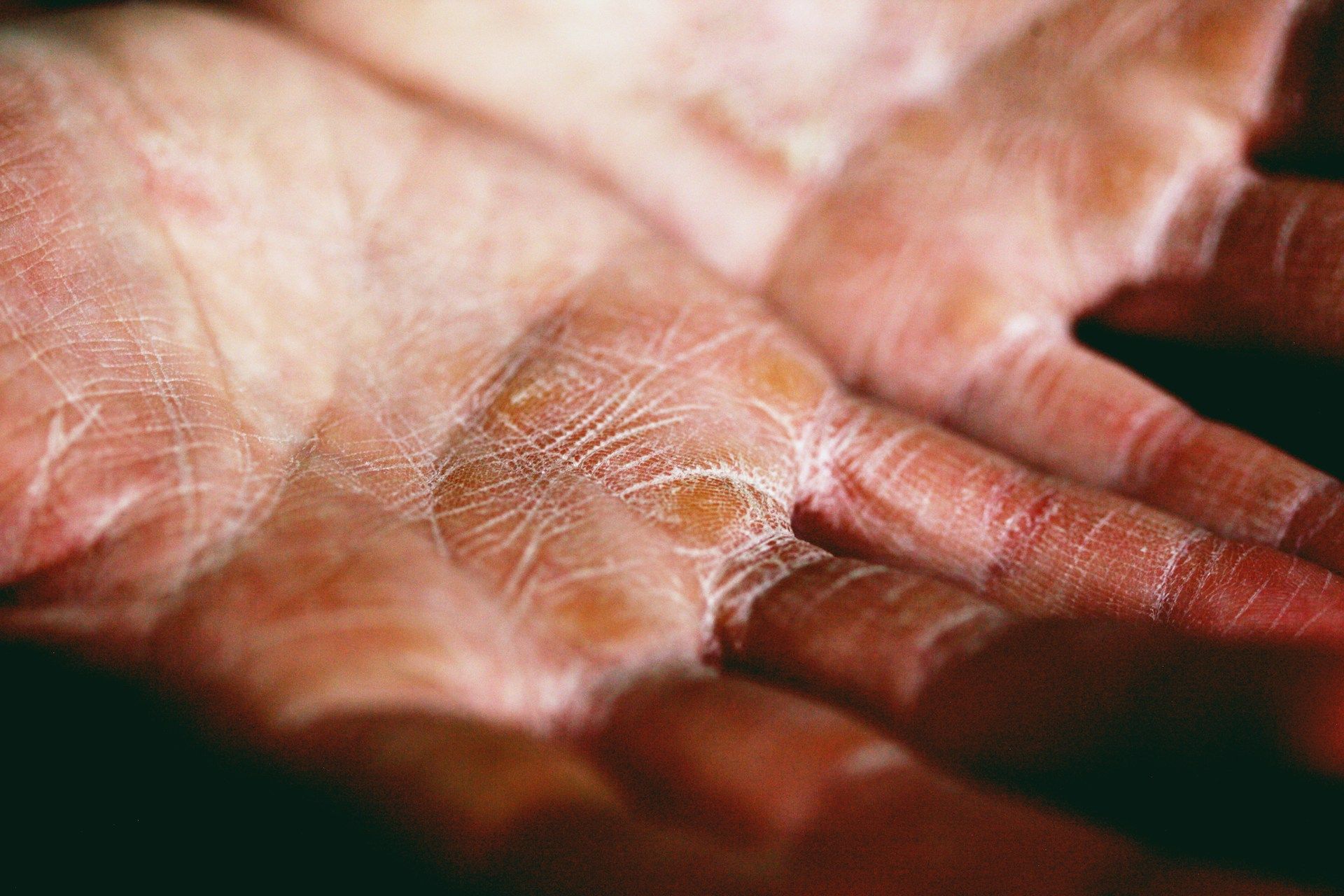
Eczema and Psoriasis are common, chronic skin conditions that can significantly impact quality of life. While they both cause skin inflammation, they are distinctly different, and understanding them is the first step toward effective management.
At Riverview Pharmacy, we offer discrete, professional advice and a wide range of products to help our North East community manage these conditions effectively, moving beyond just applying an occasional cream.
Eczema (Atopic Dermatitis): Characterised by dry, inflamed, red, and intensely itchy skin. It often appears in creases (e.g., behind the knees or elbows) and is linked to allergic tendencies like hay fever or asthma.
Psoriasis: An autoimmune condition where skin cells are produced too quickly, resulting in raised, red plaques covered in thick, silvery-white scales. It most commonly affects the elbows, knees, scalp, and lower back.
If you are unsure which condition you have, your Riverview pharmacist can offer a preliminary assessment and guide you on the next steps.
For both Eczema and Psoriasis, the cornerstone of care is a high-quality emollient (a medical moisturiser). This is more important than any other single treatment.
How to Use: Emollients should be used liberally, even when the skin feels clear, to maintain the skin's barrier function. We recommend the ‘three-minute rule’: apply the emollient within three minutes of bathing or showering to lock in moisture effectively.
Choosing the Right One: Emollients come in various forms (creams, lotions, ointments). Ointments are often best for very dry skin as they are thicker and create a stronger barrier. We can help you find one that suits your skin and lifestyle.
During a flare-up, your pharmacist or doctor may recommend a topical corticosteroid (steroid cream or ointment). These reduce inflammation and itchiness quickly.
Key Advice: Steroids must be used sparingly and only on affected areas, as directed by a healthcare professional. We recommend learning the Finger Tip Unit (FTU) method—the amount of cream from the end of the finger to the first crease—to ensure you use the correct, safe amount. Do not be afraid of steroid creams, but always use them with respect and guidance.
Effective, long-term management involves avoiding factors that worsen the condition:
Common Triggers: Stress, harsh soaps, detergents, specific fabrics (like wool), and cold, dry weather can all cause flare-ups.
The Skin Diary: We suggest keeping a simple diary to track what you eat, what products you use, and when flare-ups occur. This helps you identify personal triggers.
Your Riverview pharmacist is here to provide continuous support and advice on managing these chronic conditions, ensuring you get the most out of your treatment regimen.

Whether you’re picking up prescriptions, exploring our wide range of over-the-counter products, or seeking guidance on specific conditions, our team is here to support you every step of the way.
Browse our services